-
 Open Hours: Mon- Sat 10:00 am - 06:30pm



Azithromycin, Fluconazole & Secnidazole Tablet Manufacturer & Supplier | PCD Franchise in India


Aceclofenac & Drotaverine Hydrochloride Tablets
September 22, 2026
BEMIGOLD 5G Capsules
September 22, 2026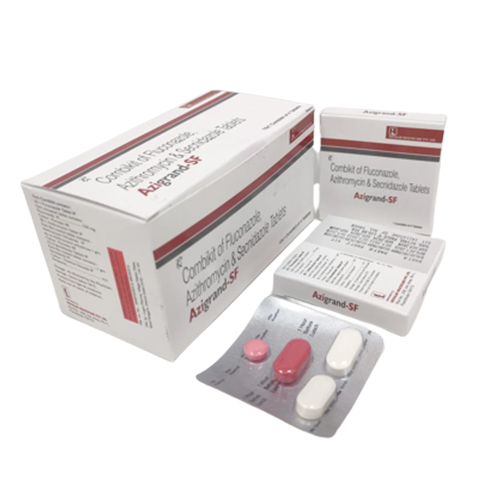
Azithromycin, Fluconazole & Secnidazole Tablet
AZIGRAND-SF Kit is a combination of three tablets — Azithromycin, Fluconazole, and Secnidazole — working together against vaginal infections. Each one plays a distinct role: Azithromycin targets bacterial infections, Fluconazole handles fungal (yeast) infections, and Secnidazole takes on parasitic infections like trichomoniasis. That’s exactly why this kit is built for mixed infections — cases where bacterial vaginosis, candidiasis, trichomoniasis, or chlamydia/Neisseria are occurring together or overlapping.
Most of these infections trace back to a disruption in the vagina’s natural bacterial balance, yeast overgrowth, or a sexually transmitted infection. The symptoms are fairly recognizable too — itching, odour, and abnormal discharge — and the kit works by targeting all three underlying causes to bring the symptoms under control. The Fluconazole component specifically blocks fungal growth and breaks down the fungal cell membrane to eliminate it.
When this kit is used
Doctors typically prescribe it in three situations: first, when a vaginal infection is mixed — a bacterial, fungal, and parasitic combination all at once; second, for genital infections such as pelvic inflammatory disease; and third, as syndromic treatment — meaning when the exact cause of vaginal discharge isn’t immediately clear, the kit’s broad coverage lets treatment target the likely germs right away instead of waiting on test results.
Precautions worth knowing
Tell your doctor if you’re allergic to any of the three tablets or their components, and mention any medicines, herbal supplements, or vitamins you’re already taking. Flag any liver, kidney, or gastrointestinal issues, allergic conditions, ulcers, or urination problems before starting. If you’re already on another azole antifungal, this kit should only be taken under a doctor’s supervision.
It should be strictly avoided during the first trimester of pregnancy. Some people feel a bit dizzy after taking it, so hold off on driving or operating machinery until you know how it affects you. One more thing worth remembering — don’t take magnesium- or aluminum-based antacids alongside these tablets, as they can interfere with absorption.
How to take it
Don’t start without talking to your doctor or reading the label first — it makes a real difference in how well the medicine works. You can take it with food, or as your doctor advises. Swallow the tablet whole with a full glass of water — never crush, chew, or break it. Pregnant or breastfeeding mothers should consult their doctor before use.
Side effects
Some common ones show up — taste changes, vomiting, headache, dizziness, stomach pain, nausea, indigestion, diarrhoea, and reduced appetite. Most are mild, but if anything persists or feels severe, get in touch with your doctor.


 Call Us Number +9570599567
 Get PCD Pharma Distributorship